Breaking Down the Cost of Side Extensions

Side extensions do what they say on the tin, extending your property laterally (to the side) to take advantage of unused space.
Extending the width of your home can have a huge impact on interior space. Often, it’s possible to extend into a disused corridor of your garden (sometimes called a side-return in older Victorian properties).
One of the first questions homeowners ask us about side extensions is how much they cost – which is obviously understandable.
Whether you're planning a standard single-storey or an ambitious double-storey extension, understanding the financial implications helps you plan effectively and avoid nasty surprises along the way.
Let's break down the cost of side extensions, along with the key factors that contribute to the final price tag.
Average Side Extension Costs
The cost of a side extension typically ranges from £2,000 to £3,500 per square metre.
This means a modest 15m² single-storey side extension might cost between £30,000 and £52,500, while a larger 30m² double-storey extension could range from £60,000 to £105,000.
These figures cover standard builds with mid-range materials and finishes. However, like any building project, the final cost depends on your specific requirements and choices.
We've seen simple side extensions completed for less, while high-end projects with luxury finishes can push beyond £4,000 per square metre.
Unlike rear extensions, side extensions often require more complex structural work due to their position and the need to tie into existing walls. This can affect the overall cost per square metre compared to other types of extensions.
The upside of that is that the resulting extension ‘connects’ more closely with your existing home in many instances – truly extending it widthways.
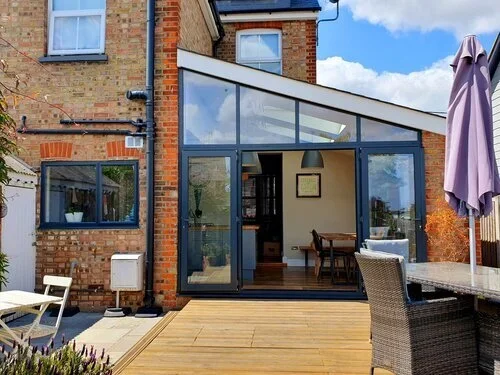
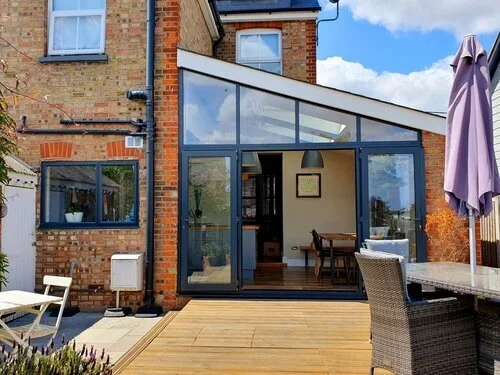
Please see below a side extension project of ours, where our client wanted a high proportion of glazing, and a more modern design.
Double-Storey Side Extensions: Worth the Extra Height?
You can build double-storey side extensions, too, adding space on both the ground and first floor.
While a double-storey extension might seem like it would cost twice as much as a single-storey, the economics work out more favourably. Two-storey extensions typically offer better value per square metre – they don’t cost double just because they’re double the size.
Why? The improved value mostly comes from spreading fixed costs across more floor area – you'll only need one set of foundations, one roof, and one lot of scaffolding.
One consideration is that you’ll always need planning permission for a double-storey side extension. Some single-storey extensions fall under Permitted Development Rights (PDRs) – though it hinges on their size and other factors. Factor in extra time and costs for this process.
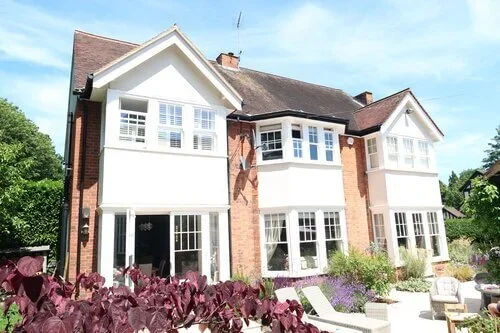
Please see below a two-storey side extension project of ours, where our client wanted a large extension to match the style of his period property.
What Influences Side Extension Costs?
When homeowners first approach us about side extensions, they often focus solely on the base construction costs.
The reality is that several key factors shape your final budget - and understanding these early on can save you thousands of pounds.
Of course, it does all largely depend on your property and side extension ideas. But we can still map out the core costs that apply universally across projects.
Architectural Fees
Architectural fees typically range from 3% to 12% of your total build cost. For a £50,000 side extension, that means between £1,500 and £6,000. Many architects also offer project management services for an additional 3-5% of the build cost.
While this might seem like a significant chunk of your budget, excellent architectural input often ends up saving you money.
The architect’s job is not confined to the design and build process. They’ll also identify issues before they become expensive problems, optimise your design to reduce construction costs and ensure you're not paying for unnecessary work.
Your architectural fees typically cover:
Initial site surveys and feasibility studies
Design development that maximises space and light
Planning application preparation and management
Technical drawings for building regulations
Structural specifications and calculations
Planning and Building Control
You’re not guaranteed to need planning permission for every single-storey side extension, but it’s fairly likely given that their length often exceeds PDRs.
Planning permission fees start at around £250, but success very much depends on preparing a watertight application.
Your architect will be instrumental here, creating detailed drawings and documentation that address potential concerns before they become objections.
They'll also help you understand any local planning policies – such as conservation area rules – that might affect your project.
Complying with building regulations contributes to overall costs, which, while variable, might span between £750 and £1,500 in terms of application fees. This ensures your extension satisfies all safety and construction standards.
If you share walls with neighbours, you'll need Party Wall agreements too – budget £700 to £1,500 per neighbour for this legal requirement. The cost per neighbour can be as low as simply the cost of serving the notice letter on your neighbour, but if they require a full party wall agreement the cost will be higher still.
Location Matters
Extension costs vary widely with location, with London and the South East costing slightly more than elsewhere across the UK.
Beyond location alone, busy town and city areas often come with restricted access, inflexible storage space (depending on any available gardens), and more convoluted logistics. Your builder might need specialist equipment or permits just to get materials to your site.
But remember, cheaper is definitely not always better – and if there’s one thing it’s worth spending a bit more on for best quality – it’s an extension!
All in all, local architects and builders who understand area-specific challenges will often provide you with better value, even at higher rates.
Ground Condition
Poor soil conditions might require deeper foundations or special construction methods. Trees nearby? Their roots could affect foundation design and cost.
Even the slope of your plot plays a part – building on a level site generally costs less than dealing with sloping ground.
Materials and Finishes
Materials and finishes affect everything from the external construction to the interior – think flooring, wall finishes, trims, doors, etc.
Basic brick and block construction costs less than natural stone or extensive glazing, but premium materials often offer superior longevity and lower maintenance costs.
Think carefully about features like:
Window and door specifications
Roofing materials
Insulation types
Internal finishes
Heating systems
The key is balancing initial costs against long-term benefits. Better insulation might cost more now but save money on heating bills for years to come.
Exploring Specific Side Extension Costs
When planning your side extension budget, it helps to understand how costs typically split across different elements of the build. From our experience across hundreds of projects, here's what you can expect your money to be spent on.
Groundwork and Foundations
The foundation stage typically consumes 15-20% of your budget.
This covers everything needed to create a stable base for your extension, from excavation to concrete pouring and damp proofing. Costs here largely depend on ground conditions and your extension's size.
Structure and Shell
The basic structure – walls, roof, and windows – usually accounts for around 30% of your budget.
Key costs include:
External walls and structural support
Roof construction and covering
Windows and external doors
Connecting to existing building
Initial weatherproofing
Internal Works and Finishing
The internal fit-out typically takes up 40-45% of your budget. This turns your weathertight shell into a liveable space, covering everything from plastering to final decorations.
Your exact costs here depend heavily on your chosen specifications. Premium options will obviously set you back more but can prove more cost-effective over time – plus will contribute to the long-term value of your property and its resale value.
Services and Integration
The final 10-15% goes toward services – electrical, plumbing, and heating. This includes:
Extending your heating system
New electrical circuits and lighting
Any additional plumbing
Connecting to existing services
Required testing and certification
For side extensions, combining your extension with your existing home can throw up unexpected challenges. It’s also wise to set aside a contingency fund of 10-15% helps manage these surprises without derailing your project.
When you're comparing quotes, make sure they break down costs across these areas. It helps you understand exactly what you're paying for at each and every stage of your project.
Transform Your Home with a Side Extension
Adding a side extension represents an outstanding investment in your home's future and your family's comfort. Gaining a firm grip of the project costs will help you allocate your budget and compare quotes rather than flying into your project blind.
At Humphreys and Sons, we've guided countless homeowners through successful side extension projects across London, Essex, and the surrounding areas.
We’ll provide you with expert support from initial concept through to completion, ensuring your project runs smoothly and delivers excellent value for money.
We understand that each and every project has its fair share of nuances, which is why we begin with a free consultation to understand your specific needs and budget. Our team will:
Assess your property's potential
Explore design options that maximise value
Explain planning requirements
Provide realistic cost estimates
Recommend trusted contractors
Want to learn more about how a side extension could totally transform your home? Contact us today for a free consultation.
Whether you're just starting to explore ideas or ready to move forward with your project, we're here to help you make informed decisions about your home's future.